Protecting people and the planet: Meet Dr Connie Gan
In the August edition of our researcher profile series, we feature Dr Connie Gan, a lecturer in the School of Medicine and Dentistry and co-theme lead of climate and disaster community resilience research in the Griffith Institute for Human and Environmental Resilience. Connie is dedicated to advancing sustainable healthcare through projects that help hospitals adapt to climate change, mitigate disaster risks and enhance community care. We explore her journey into research, her collaborations with the World Health Organisation (WHO) and her passion to create a more just and sustainable future for all.
What path led you to becoming a researcher?
I’ve wandered down quite a few paths as I’ve continuously shaped my researcher identity. Growing up in Malaysia, with its amazing mix of cultures, opened my eyes to how differently people see and move through the world. As the first in my family to earn a PhD, I carry forward my grandfather’s legacy—he built schools and valued education as a way to give back. This heritage drives me to make a meaningful difference in a society I care so much about. Each step has been guided by a love of learning and a belief that knowledge should serve something bigger than just ourselves.
During my undergraduate and masters studies in public health, I joined multiple collaborative projects with local clinics and communities—from diabetes care improvement and breastfeeding programs to tuberculosis prevention and control. These initiatives addressed pressing health needs in resource-limited settings. Recognising my enthusiasm, my professors invited me to conduct field research in places with limited healthcare access, allowing me to engage with health challenges and witness community resilience firsthand.
I also volunteered in flood and earthquake disaster relief efforts, directly experiencing how environmental factors impact health outcomes. These varied hands-on experiences fundamentally shaped my understanding of research’s potential and purpose. They taught me that meaningful research must be rooted in lived realities and conducted with profound respect for local knowledge systems.
For me, being or becoming a researcher is all about never ceasing learning and embracing being wrong. The path hasn’t always been clear—at times it was downright scary not knowing where I was headed. Mentors showed me diverse researcher identities: theory builder, or advocates using research to advance social justice at international policy meetings, or public intellectuals making complex topics accessible and many more.
Throughout my journey, I’ve also come to appreciate the power of interdisciplinary thinking. Some of my insights have emerged from connections and conversations with anthropologists, engineers, artists and traditional knowledge holders—people whose training and worldviews differ dramatically from my own. These connections have taught me that the most interesting questions often lie at the intersections between established fields of inquiry.
‘Observing both my mother and the dedicated healthcare staff during that challenging period, I realised healthcare should be about more than just treating illness…’
What sparked your passion for your research area?
During my public health placements and fieldwork, I witnessed families battling tuberculosis whose health outcomes were cruelly shaped by environmental and social conditions they had virtually no power to control—an experience that humbled me to my core. Working with disaster-affected communities showed me firsthand how our environment directly impacts healthcare access, while social determinants profoundly influence disease patterns and treatment outcomes.
The experience then became personal. During my mum’s breast cancer treatment, I observed the clinical nature of hospital environments. These institutional spaces often lacked the warmth and comfort conducive to healing. Observing both my mother and the dedicated healthcare staff during that challenging period, I realised healthcare should be about more than just treating illness—it should be about creating spaces that support the whole person. And evidence showed significant environmental footprint of healthcare facilities through their energy consumption, waste generation, and resource utilisation. This pivotal experience cultivated my professional interest in hospital design that promotes genuine healing—creating environments that support patients, healthcare providers and families, while maintaining environmental responsibility.
At Griffith, my PhD focused on future-proofing hospitals against disasters in a changing climate. I used an action research approach, both participating in and studying change processes. This approach dissolved the traditional boundary between ‘researcher’ and ‘subject’, positioning me as both change agent and observer. Through cycles of planning, action, observation, and reflection with hospital staff and patients, we co-created knowledge directly applicable to improving healthcare environments.
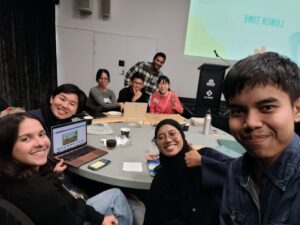
My research is focused on reorientating healthcare services to protect both the health of people and the planet. Previously, I facilitated database development across China, Indonesia and Vietnam to enhance support for vulnerable communities through improved knowledge-sharing mechanisms as part of the WHO Knowledge Hub for Health Emergency and Disaster Risk Management (Health-EDRM). I collaborated with HECAF360 to implement WHO guidelines for climate-resilient healthcare facilities in Nepal. Building on my doctoral research, I’ve developed hospital climate adaptation strategies that align national carbon reduction targets with international standards. I’ve also conducted research on gender-differentiated impacts and preparedness for COVID-19 and disasters, and designed planetary health curricula for medical and public health education programs.
As the lead researcher for the CORE-STEP project, funded by the Australian Government through KONEKSI, I work with marginalised populations to integrate climate services into healthcare planning at the primary healthcare centres in Indonesian coastal cities. I collaborate with aged-care facilities to explore food security and develop disaster management protocols specifically designed for elderly residents with context-sensitive needs. Currently, I’m working with colleagues on the Program to Equip Taiwanese Healthcare Leaders for a climate-resilient System (PETALS). This training program helps emerging hospital leaders build essential skills in climate leadership, adaptation strategies, emergency preparedness and sustainability. It combines self-paced online learning with face-to-face workshops and includes a study tour to Australia. We are creating engaging online modules alongside interactive sessions covering everything from disaster response to sustainable facility management and the health impacts of climate change.
Working with PhD and masters researchers on fascinating topics like healthcare greenhouse gas management, cultural practices adapting to heat and mental wellbeing of disaster responders. These diverse projects reflect what I care about most—research that crosses traditional boundaries, empowers communities, and leads to meaningful policy change. As one of the inaugural members of the Indo-Pacific Cooperation Network, I’m passionate about expanding planetary health research in the Indo-Pacific region, particularly exploring how Indigenous knowledge, community innovation and collaborative policy can create more just and sustainable futures.
‘Surround yourself with people who uplift you, who challenge and support you, and remember that your lived experience is a strength.’
Do you have any advice for researchers just starting out?
As someone still finding my own way, I totally get the temptation to search for that magic formula for success. I’ve learned there’s no one-size-fits-all approach. What works for others might not work for you—and that’s perfectly fine. Experiment with different methods, environments and collaboration styles until you find what suits your unique strengths and circumstances. Research can feel like navigating uncharted waters sometimes, especially when you’re breaking new ground or learning systems from scratch. Your unique perspective is a treasure—whether you’re just taking your first steps or you’ve been walking this path for years. Seek mentorships and build your research family—people with whom you can share both triumphs and stumbles. Find those who know your story—the ups and downs, the moves, the good and the hard years. Surround yourself with people who uplift you, who challenge and support you, and remember that your lived experience is a strength.
I’ve learned that even the most beautiful research designs often fall apart when they are hit with real-world complexities. Some of our biggest breakthroughs happen exactly when everything seems to be falling apart! I’ve also learned that the most impactful research involves deep reflection and adaptation. By continuously questioning my methods, assumptions and even my role as a researcher, I’ve been able to identify opportunities for intervention that might otherwise remain hidden. This reflective practice has helped me develop research that actively contributes to solutions—whether through policy briefs, community workshops or redesigned healthcare protocols that directly address identified needs. These experiences weren’t merely about observing different lives from a dataset or a safe distance—they were about walking alongside people I grew to care for deeply, understanding their challenges from within rather than without, and feeling their struggles and triumphs as my own. Above all, keep sight of the ‘why’: let your research be guided by purpose, and let that purpose be in service of others.
Griffith is proud to produce world-class research contributing to the Sustainable Development Goals.

Are you thinking of pursuing a research degree?
If you would like to find out more, check out the research study web page.